Nursery Sleep • Parent’s Guide
A Parent’s Guide to Choosing an Organic Crib Mattress
A crib mattress may look like a simple nursery purchase, but it plays an important role in creating a safe place for a baby to sleep. The best choice starts with the basics: a snug fit, a firm and flat surface, clear material information, and care instructions you can realistically follow.
Organic labels can help families narrow their search, but they are only one part of the decision. This guide walks through crib mattress safety, materials, certifications, fit, and upkeep—and explains how to assess brands such as Naturepedic without letting marketing claims take the place of practical checks.
Start with the sleep space, not the label
When parents begin researching an organic crib mattress, it is easy to be drawn first to words such as “natural,” “clean,” or “chemical-free.” Those descriptions may sound reassuring, but they do not answer the most urgent question: does the mattress create an appropriate sleep surface for the crib?
A baby’s sleep space should have a firm, flat mattress designed for the crib, covered only by a fitted sheet. The mattress should fit snugly, without noticeable gaps between its edges and the crib sides. Soft toppers, pillows, loose blankets, toys, and other cushioning do not belong in the crib’s sleep area. Always follow current safe-sleep guidance from trusted pediatric and child-safety organizations, along with the instructions supplied with the crib and mattress.
These fundamentals apply whether a mattress is made with organic cotton, wool, latex, or other materials. Organic sourcing does not replace the need to check fit, firmness, product instructions, and the crib’s condition. A thoughtfully made mattress still needs to be the right size and used as intended.
Measure for a close, secure fit
Crib dimensions can vary, and a mattress that appears to fit at first glance may leave a gap once it is placed in the frame. Check the crib manufacturer’s specifications and compare them with the mattress dimensions before buying. If you already have the crib, measure its interior according to the manufacturer’s directions rather than estimating from the outside.
After setting up the mattress, inspect the perimeter. It should sit level and close to the crib sides, with no space that could create a hazard. Check that it does not rock, bow, or sit unevenly on the support system. The mattress should also be compatible with the crib’s adjustable mattress platform and any height settings.
Be especially careful when buying a used crib or mattress. Confirm the model, age, condition, and manufacturer instructions, and make sure the mattress has not been altered or damaged. A mattress that has softened, sagged, torn, or lost its original shape may no longer provide a reliable surface. When compatibility or condition is uncertain, consult the manufacturer or choose a new, correctly matched mattress rather than trying to make an unsuitable one fit.
- Confirm the crib’s interior measurements and the mattress’s stated dimensions.
- Use the crib and mattress together only as their manufacturers direct.
- Check the fit again after assembly and whenever you change the mattress setting.
- Do not fill gaps with towels, foam, padding, or other improvised materials.
Retail listings sometimes describe crib mattresses by a familiar standard size, but checking the actual product specifications is still worthwhile. A snug fit is a practical, visible test—not a feature to assume from a product name.
Firm and flat means just that
For a baby’s crib, a firm, flat surface is more important than a plush or pillow-like feel. Adult comfort preferences do not translate directly to infant sleep. A mattress that feels soft and luxurious to an adult may not be suitable for a crib, so avoid choosing by a quick press of the hand or by the language used in a lifestyle description alone.
Look for a mattress specifically intended for infant use and review its construction details and instructions. The surface should remain flat and stable in the crib. Avoid adding an aftermarket topper or thick pad to make it feel softer. Extra cushioning can change the sleep surface and may affect the mattress’s fit beneath a fitted sheet.
Some families consider a two-stage mattress, with one side intended for infants and another for toddlers. If you are evaluating one, check the manufacturer’s directions closely: which side is for which age or developmental stage, when to turn it, and whether the crib itself permits the configuration. Do not infer the correct side from appearance or firmness alone.
What “organic” can—and cannot—tell you
Organic materials may matter to families who want to understand how fibers were grown or processed. Cotton, wool, and other materials can appear in mattress covers, padding, or fill, but a product’s overall construction may include several components. Read the full materials list and find out which parts of the mattress a certification applies to.
Certifications can offer helpful, third-party information, but their scope differs. One standard may address organic fiber content, while another may evaluate particular environmental or chemical criteria. A certified cover does not automatically mean every component of the mattress is certified. Look for the certification name, the organization that issued it, and an explanation of what was assessed. If the product page is unclear, ask the brand for documentation rather than relying on a badge or broad claim.
It is also useful to distinguish a material description from a safety conclusion. “Organic cotton” tells you something about the cotton’s sourcing under a particular standard; it does not, by itself, establish that a mattress is the right firmness, fits your crib, or meets every requirement relevant to your family. Likewise, “natural” can be used in different ways. Specific ingredient and construction details are more informative than an appealing adjective.
Parents who are comparing products can make a short list of the materials they care about, then look for evidence supporting each claim. That approach makes the process calmer and more concrete: what is the cover made from, what is inside, what is certified, and what does the manufacturer say about use and care?
A closer look at materials and construction
Crib mattresses may use cotton, wool, foam, latex, springs, or combinations of materials. Each construction has its own feel, weight, maintenance needs, and product-specific instructions. A material’s reputation is not a substitute for reviewing how the finished mattress is made.
Cotton is commonly used in covers and padding. Parents may appreciate its familiar fiber content, but they should check whether the cotton is organic, what portion of the mattress it represents, and how the cover is meant to be cleaned.
Wool may be used as padding or in a barrier layer. It can have moisture- and temperature-related properties described by the manufacturer, yet it still needs to be part of a crib mattress specifically designed for infant sleep. Do not assume a wool-filled product is appropriate simply because the material is natural.
Foam and latex products vary in formulation and construction. If considering either, read the product’s specifications, certifications, and use instructions. Families with known sensitivities should consult an appropriate health professional when they have questions about material exposure or allergies.
Innerspring and hybrid designs use coils, sometimes alongside foam or fiber layers. Their construction may affect weight and handling, so check how the mattress is installed, turned, or cleaned. No single category is automatically the best choice for every family; the finished product must meet the needs of the crib, the child, and the caregiver responsible for maintenance.
How to compare Naturepedic and other brands
Naturepedic is one brand parents may encounter while researching organic crib mattresses. Treat it as you would any other manufacturer: compare the exact model’s specifications with your crib, review the materials and certifications, and read the care and warranty information. A brand name alone does not establish that a particular mattress is right for a particular crib.
Product lines can include different dimensions, constructions, and features. Make sure you are looking at the infant mattress model you intend to buy, not an adult mattress or a similarly named product. Confirm its height and measurements, the materials used in each layer, the type of cover, and whether the mattress is designed for the crib and stage of use you have in mind.
Use a comparison checklist rather than trying to decide which brand has the most impressive wording:
- Is the product explicitly intended for infant use in a crib?
- Do the mattress dimensions match the crib manufacturer’s requirements?
- Does the manufacturer describe the surface as firm and flat and provide clear instructions?
- Are materials, construction, and certification details specific and verifiable?
- Can the cover or mattress be cleaned in the way your household needs?
- Are there clear instructions for inspection, use, and any two-stage configuration?
- Can you reach the manufacturer with questions about compatibility or care?
For families in Salt Lake City and elsewhere, local availability should not rush the decision. Whether shopping online or in person, save the model name and technical details, verify current information with the manufacturer, and keep the instructions after purchase. Retail descriptions can be concise or change over time; the manufacturer’s current documentation is the better place to confirm product-specific requirements.
Protection and everyday care
Babies bring spills and laundry into the daily routine, so care instructions deserve a place in the buying decision. Some mattress covers are removable; others are not. Some products allow spot cleaning, while others have more specific restrictions. Avoid soaking a mattress or using a cleaning product unless the manufacturer says it is appropriate. Moisture trapped inside a mattress can create problems, and aggressive cleaning may damage its materials.
A fitted crib sheet should be the only bedding on the sleep surface. If you are considering a mattress protector, check that it is specifically intended for the mattress and does not interfere with its firmness, flatness, or fit. It should not bunch, create a soft layer, or make the fitted sheet loose. Follow both the mattress and protector instructions.
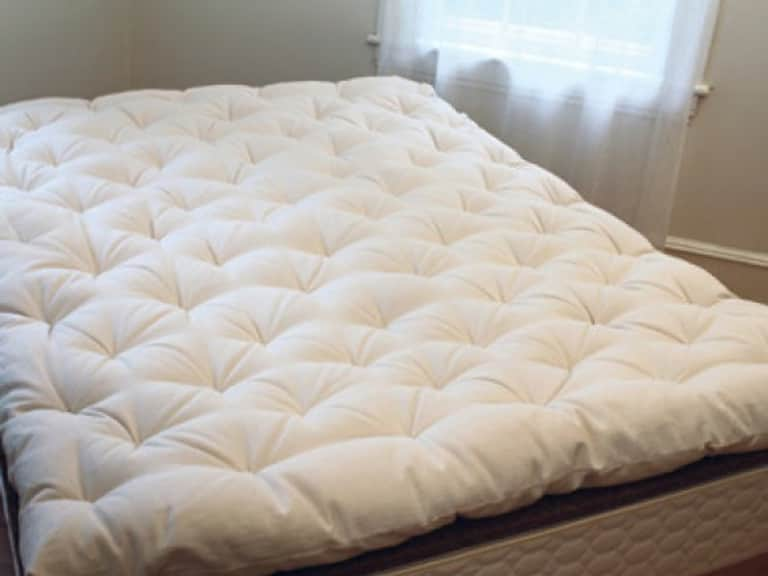
A product such as the Organic Crib Mattress Pad is an example of a crib-sized bedding layer described as organic cotton and machine washable. A pad or protector is not required simply because a mattress is organic, and it should never be used if it compromises the sleep surface or conflicts with the mattress manufacturer’s directions. When in doubt, ask the manufacturer or a qualified child-safety professional before adding anything between the mattress and fitted sheet.
Check the mattress periodically for tears, stains that cannot be cleaned as directed, sagging, exposed filling, or a change in shape. Make sure the crib’s support remains secure and the mattress still fits properly. If the product is damaged or no longer holds its shape, contact the manufacturer for guidance about whether it should be replaced.
Budget, longevity, and the pressure to get it perfect
Nursery shopping can make every choice feel unusually consequential. It helps to remember that a higher price or a longer list of materials does not eliminate the need for basic safety checks. Set a budget, identify the features that matter most to your family, and compare a few suitable options rather than chasing every new claim.
Consider practical ownership costs as well as the purchase price: shipping, delivery, cleaning requirements, the cost of a compatible fitted sheet, and the mattress’s warranty terms. Ask whether the warranty covers the concerns you are most likely to have, and note any conditions that affect eligibility. A long warranty is not a guarantee that a mattress will be appropriate for every child or fit every crib.
Longevity also depends on following the manufacturer’s care instructions and using the mattress only as intended. Do not assume a crib mattress can be passed along indefinitely. Its condition, model information, history, and compatibility all matter. If you are considering a hand-me-down, inspect it carefully and confirm that it remains suitable for the specific crib.
A straightforward pre-purchase checklist
Before placing an order, take a moment to check the essentials. This small pause can prevent a costly mismatch and make it easier to feel settled about your decision.
- Crib compatibility: The mattress is made for infant use and matches the crib’s requirements.
- Correct fit: Dimensions are confirmed, and the mattress sits snugly and level in the frame.
- Firm, flat surface: The product is designed for the intended stage and is used without added cushioning.
- Understandable materials: The manufacturer lists the components and explains the construction.
- Clear certification claims: You know which materials or product attributes each certification covers.
- Manageable care: Cleaning and maintenance instructions suit your household.
- Reliable documentation: You can retain the manual, model details, and manufacturer contact information.
Once the mattress is installed, follow the crib and mattress instructions and keep the sleep space simple. A fitted sheet, a secure mattress, and a correctly assembled crib are more useful than a nursery full of accessories.
The bottom line for parents
Choosing an organic crib mattress does not have to become an exercise in decoding every label or anticipating every possible concern. Start with the non-negotiables: a firm, flat surface, a snug fit, and a mattress designed for your crib and intended use. Then compare materials, certifications, cleaning instructions, and product support with a clear idea of what matters to your family.
Naturepedic and other brands can be part of that comparison, but the strongest choice is the one whose exact specifications you can verify and whose instructions you can follow. Organic cotton or another preferred material may be a meaningful priority; it should complement, not distract from, fit and safe use.
And if a product description leaves you unsure, ask a direct question before buying. Parents do not need a perfect nursery to make a thoughtful decision. They need reliable information, a suitable mattress, and a sleep space kept simple, clean, and consistent with current safety guidance.