Pillow fit & sleep comfort
Pillow Loft and Sleep Position: Finding a Better Fit
The right pillow is not simply the softest one on the bed. Its height, shape, and feel help determine how comfortably your head rests in relation to your neck and shoulders—and the best match can change when you roll from your back to your side.
A pillow that feels cozy at first touch may not keep you comfortable through the night. Too much height can tip the head upward; too little can leave it dropping toward the mattress. A pillow that compresses easily may feel very different after you settle into it, while a shaped, firmer design can offer a more consistent surface. These details matter because your pillow and mattress work together to support your body.
There is no universal pillow loft that suits every sleeper. Shoulder width, mattress softness, preferred sleep position, and personal comfort all influence how a pillow feels. The goal is not to force your body into a rigid posture, but to find a pillow that fills the space beneath your head without creating strain or an uncomfortable angle.
What does pillow loft mean?
Loft is a pillow’s height, often described as low, medium, or high. It is related to thickness, but the number you see on a product label does not tell the whole story. A fluffy pillow may compress substantially beneath the head, while a denser or molded pillow may retain more of its shape. Your effective loft is the height that remains once you are lying down—not just how tall the pillow looks on the bed.
Firmness and loft are connected, but they are not interchangeable. A low-profile pillow can feel firm, and a high-loft pillow can feel soft. Fill material, construction, and the way a pillow responds to pressure all influence how much support you experience. That is why comparing pillows by height alone can lead to a disappointing fit.
Shape matters, too. A traditional pillow has a broad, relatively even surface that can be shifted and scrunched. A contour pillow has a molded profile intended to cradle the head and provide a shaped area for the neck. Neither design is automatically better. Each offers a different feel and may suit different preferences.
Why sleep position changes the equation
Your sleeping position affects the gap between your head and the mattress. Side sleeping usually creates more space because the shoulder rests between the head and the bed. Back sleeping creates a different gap, and stomach sleeping often works best with a particularly low pillow—or no pillow under the head for some people. These are useful starting points, not strict rules: body proportions and mattress feel vary from person to person.
The pillow also interacts with the mattress. A plush mattress may allow the shoulder to sink farther when you sleep on your side, reducing the gap a pillow must fill. A firmer surface may compress less. So even if two people have similar builds and sleep positions, they may prefer different pillow heights because their mattresses respond differently.
Side sleepers: consider shoulder width and mattress give
For side sleepers, the main question is whether the pillow comfortably fills the space between the mattress and the side of the head. A pillow that is too low may let the head angle toward the bed; one that is too high may push it upward. Either mismatch can feel awkward, especially if you spend long stretches in one position.
Shoulder width can influence that space, but it is not the only factor. How deeply your shoulder sinks into the mattress, how much the pillow compresses, and whether you shift positions all contribute. Instead of choosing a pillow solely because a label calls it “for side sleepers,” notice how it feels once your shoulder and head are settled in your usual position.
A contour design may appeal to side sleepers who like a more defined place for the head and neck. The Savvy Rest Organic Latex Contour Pillow is molded from Dunlop latex, has a firm overall feel, and features a higher rounded edge and a lower edge. Its listed dimensions are 24 by 16 inches, with heights of 4.75 inches on the higher side and 4 inches on the lower side. Those details can help you assess whether its shape and height are worth trying, but they cannot predict personal comfort on their own.
If you prefer to adjust a pillow by folding or scrunching it, a more traditionally shaped design may feel easier to personalize. A molded pillow is less flexible by design, so the contour needs to suit the way you naturally rest your head. Give yourself time to assess both the shape and the sensation of the material.
Back sleepers: look for a comfortable, supported feel
Back sleepers generally have a different support need from side sleepers: the pillow should feel comfortable under the head without pushing it noticeably forward. A high, heavily filled pillow may feel crowded for some people, while a very flat one may feel insufficient. The best height depends on your build, pillow compression, mattress, and preference.
Some back sleepers like the gentle cradle of a contour pillow, particularly if the shape feels natural rather than restrictive. Others prefer a soft, conventional pillow that can be repositioned. The Savvy Rest contour design includes a center hollow intended to cradle the head and curved edges that allow a choice of height. Whether that configuration suits you depends on how your head and neck settle into it; the stated design features are not a guarantee of a specific result.
When trying a pillow, pay attention to whether you can settle into your usual position without constantly pulling the pillow into place. Comfort is a practical signal. If the shape repeatedly feels intrusive or makes you want to move your head away from its intended area, another profile may feel more natural.
Stomach sleepers: why lower can feel easier
Stomach sleeping places the head turned to one side, and a tall pillow can add more lift than some sleepers find comfortable. For that reason, stomach sleepers often prefer a low-profile, softer pillow. Some choose not to use a pillow beneath the head. Personal comfort still matters, and there is no need to stick with a setup that feels unpleasant simply because it is commonly recommended.
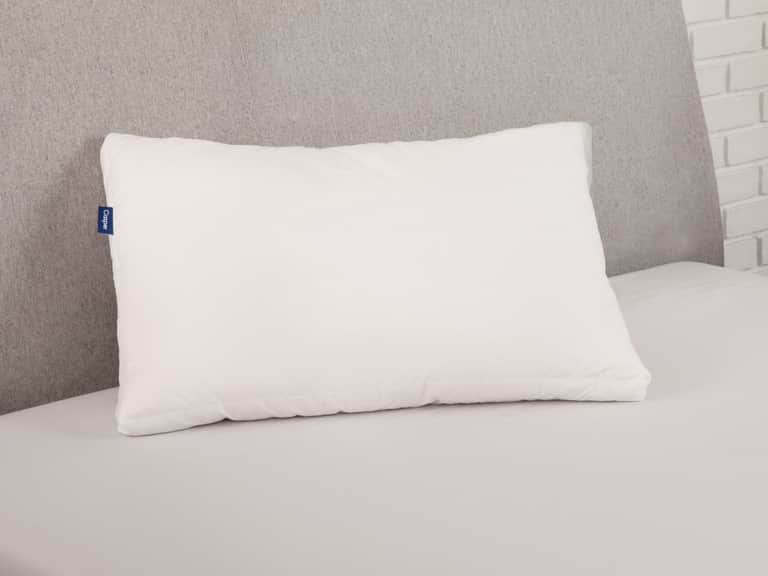
A low-profile down pillow may be a useful option to consider if you like a soft, traditional shape. The Down Pillow is described as soft and low profile, with ethically sourced down and a five-chamber construction designed to help it keep its shape. Its low profile is relevant to shoppers who do not want a tall pillow, although the actual feel will depend on how the fill responds under your head and how you prefer to sleep.
A low pillow is not automatically ideal for every stomach sleeper, just as a contour design is not automatically right for every side sleeper. Use the position that feels comfortable to you as the starting point, then consider whether the pillow’s height and structure feel compatible with it.
Low-profile down and contoured latex: two different experiences
A soft down pillow and a molded latex contour pillow differ in more than material. They offer distinct ways of supporting and shaping the sleep surface. A low-profile down pillow tends to have a yielding, traditional feel that some sleepers enjoy for its softness. A contour latex pillow has a more defined shape and a firmer, molded feel. Neither is a universal solution, and their intended strengths are best understood as preferences to compare rather than promises.
| Feature | Low-profile down | Contoured latex |
|---|---|---|
| Feel | Soft and yielding | Firm and more structured |
| Shape | Traditional pillow profile | Molded contour with distinct edges |
| Adjustment | May be easier to shift or scrunch | Shape is more defined and less changeable |
| Potential fit to explore | People who prefer a softer, lower surface | People who prefer a firm, shaped surface |
The Down Pillow’s five separate chambers are designed to help it retain its shape, while its profile is described as low. The contour pillow’s molded Dunlop latex, firm feel, and two different edge heights offer a more structured experience. It may help to ask yourself a simple question: Do you want a pillow you can bunch and reposition, or do you prefer a defined shape that stays consistent?
A practical way to assess pillow fit
A few thoughtful checks can make a pillow comparison more useful than a quick squeeze in a store or a glance at the listed height. Try to test the pillow in the position you use most often, and pay attention to the way it feels after you have settled.
- Start with your usual sleep position. Lie down as you would at bedtime rather than evaluating the pillow upright.
- Notice the mattress beneath you. Your shoulder may sink more or less depending on the mattress surface, changing the space the pillow needs to fill.
- Consider compression. A pillow’s listed height may not reflect the height it maintains once your head rests on it.
- Check how the shape feels. A contour should feel like a natural resting place, not a ridge you have to work around.
- Think about how often you change positions. A single fixed shape may suit a steady sleeper; someone who moves between back and side sleeping may prefer a more adaptable feel.
- Give the comparison context. If possible, assess pillows using your own mattress and familiar bedding, since those conditions affect the overall experience.
Comfort is not measured by one visual test, and a pillow cannot diagnose or treat a medical problem. If you have persistent neck discomfort, recurring pain, or symptoms that interfere with daily life, consider discussing them with a qualified health professional. Pillow choices can be part of a comfortable sleep setup, but they are not a substitute for medical advice.
Common pillow-fit myths to leave behind
“The tallest pillow gives the most support.” Height alone does not determine support. A pillow that is too tall for your position may feel uncomfortable even if it seems substantial in your hands.
“A contour pillow is always better for neck support.” A contour offers a shaped surface, but the shape and height need to suit the individual. Some sleepers prefer a conventional pillow and find it easier to adjust.
“Side sleepers all need the same loft.” Side sleeping is a useful clue, not a complete measurement. Shoulder width, mattress softness, and pillow compression all affect the fit.
“Soft means unsupportive, and firm means supportive.” Feel and support are not simple opposites. A softer pillow may suit one person’s preferred position, while a firmer pillow may feel too rigid to another.
How your pillow works with the rest of the bed
A pillow is only one part of the sleep surface. Mattress firmness, mattress age, the height of the bed, and even the way bedding is arranged can affect how your usual position feels. If your pillow seems comfortable on one bed but not another, the mattress may be changing how much your shoulder or body sinks in.
This is especially relevant when you are comparing pillows in a shop or showroom. A brief trial on a different mattress can still help you understand the feel of a material or shape, but it may not replicate your home setup. When available, check the retailer’s current trial, return, and care policies before deciding. Policies vary, and a pillow’s construction may also influence how it should be cleaned and maintained.
Choosing a starting point, not a permanent rule
If you are unsure where to begin, match the first option to your preferences. A stomach sleeper who dislikes a tall surface might explore a low-profile pillow. A side or back sleeper who wants a more defined shape may look at a contour. Someone who likes a soft pillow that can be repositioned may favor a traditional down profile.
Then judge the actual experience rather than the label. Does the pillow feel comfortable after you settle? Does its height seem compatible with your mattress and sleep position? Do you like the material’s response? Those questions are more useful than searching for a single “correct” loft that is supposed to work for everyone.
The right pillow fit is personal and can take some comparison. A low-profile down pillow and a contoured latex design represent two very different approaches: one soft and traditional, the other firm and molded. Understanding that contrast makes it easier to choose what to try next—and to focus on a pillow that feels comfortable in the way you actually sleep.